


- In Cantieri Mapo con Architetti Bigozzi, Soffientini e Mertens
- Prima e seconda fase
- 1°premio per il progetto di trasformazione dell’ex Filanda Merloni in Centro Culturale
Il bando di concorso del Comune di Soncino (Cr) prevedeva il recupero, e la progettazione di nuovi spazi all’interno dell’antica Filanda Merloni ed in particolare:
- Auditorium /cinema / musica e teatro
- Biblioteca
- Accoglienza (uffici pro-loco, ristorante, bar, servizi
- Museo dell’antica Filanda
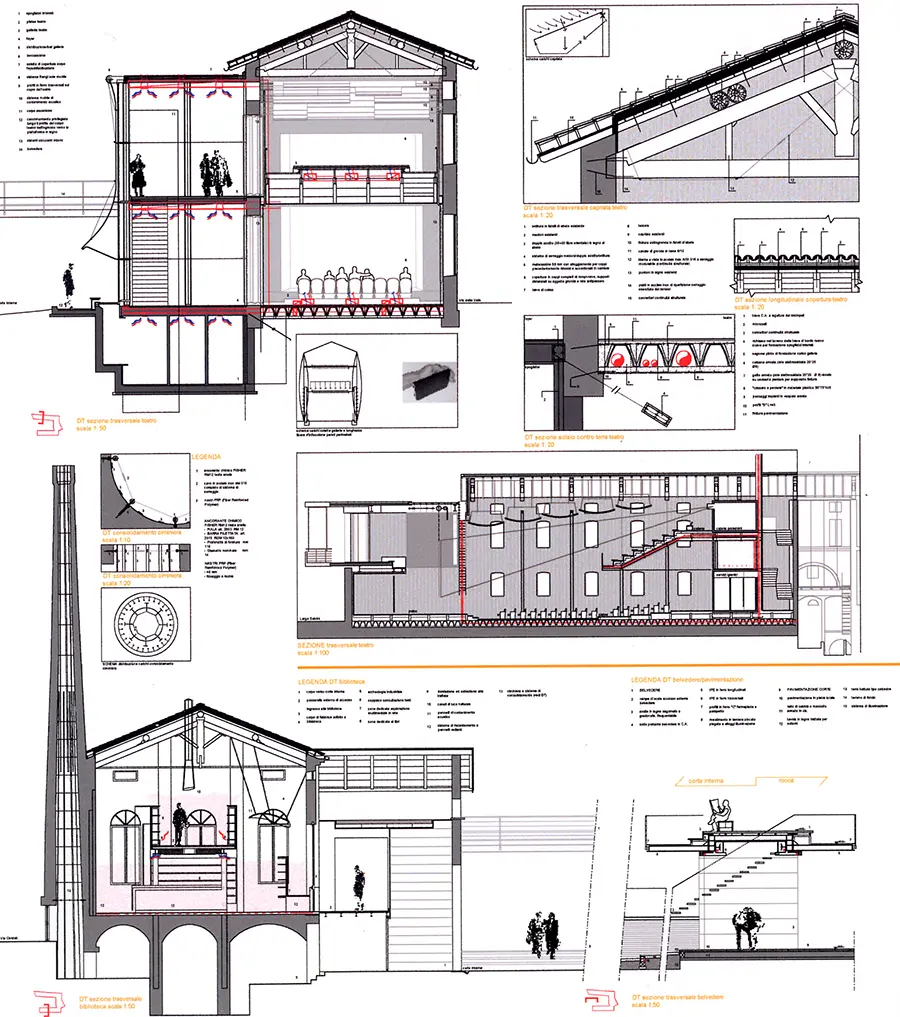
Il progetto ha il suo fulcro nella re-interpretazione del cortile interno del complesso. Da luogo privato, chiuso diventa, per le nuove funzioni insediate, la futura piazza pubblica, magnete sociale, e punto di riferimento per la cittadinanza. Da questo discende la necessità di revisione del prospetto ovest interfaccia preferenziale con la città e delicato punto di confronto con la Rocca sforzesca. In questo senso, così come per la forte necessità di rendere visibili i servizi a disposizione per i turisti, il progetto comporta la demolizione dei corpi edilizi del fronte ovest a favore di una ricostruzione sulla stessa linea di giacitura.Il nuovo prospetto fronte Rocca viene così a definirsi dalla composizione tra la nuova testa del teatro luogo del palcoscenico a ricostruzione dell’edificio crollato; dal nuovo “edificio” di ingresso in continuità con il prospetto del foyer del teatro; dalla testa dell’edificio neoclassico liberata, quest’ultima, dai tamponamenti alle finestrature e dai corpi di servizio addossati maldestramente.
Il rapporto con la presenza forte e importante della rocca viene affrontato direttamente dal progetto con un intervento sul prospetto “debole” della Filanda, proprio quello che guarda direttamente la Rocca. In virtù del nuovo ruolo di centro culturale della città e della visibilità che comporta, il progetto, elabora il tema dell’ingresso con un risultato di dimostrare chiaramente le scelte fatte grazie ad uno stilema architettonico volutamente semplificato non decorativo ma plastico, così come la Rocca ma anche lo stesso isolato urbano soncinese suggeriscono, senza voler, infine, lasciare dubbio alcuno sul carattere di contemporaneità dell’intervento. Il confronto tra il nuovo prospetto e l’esistente mette in evidenza come il programma compositivo rielabora gli elementi esistenti, pieni-vuoti, finestrature e allineamenti alla ricerca di un equilibrio tra nuove necessità e caratteri storici espressione di necessità antiche.il nuovo ingresso si configura come un luogo di soglia tra gli spazi pubblici esistenti, soggetti all’influenza della “mole” della rocca, e la nuova piazza come luogo aperto e permeabile ma, al contempo, riconducibile ad un’unità chiusa così come nel tempo si è venuta a definire; è costituito da un ampio portale in acciaio a due soli appoggi agli estremi, così da favorire la permeabilità e la libertà di passaggio.
I visitatori potranno vedere gli antichi apparati tecnologici della filanda ed al contempo percepire la presenza dei nuovi sistemi tecnologici installati.Le antiche vasche di trattamento dell’acqua dislocate nel cortile oltre che rappresentare “il luogo della memoria” saranno utilizzate come elementi di raffrescamento naturale dell’ambiente. All’interno delle due grandi vasche verrà formata una soletta impermeabilizzata appena sotto il filo dell’acqua così da mantenere il sistema delle vasche in un regime di sicurezza per gli utenti senza snaturarne il carattere. Il ricambio dell’acqua lento ma costante eviterà fenomeni di ristagno.Il sistema di illuminazione della piazza è per scelta minimale, realizzato per lo più con segnapasso, intanto per lasciare “riposare” i monumenti e per non contribuire al generale inquinamento luminoso delle città, fornendo allo stesso tempo un’illuminazione di cortesia e di sicurezza. Tutti i percorsi di bordo che permettono l’accesso ai diversi ambiti (anello perimetrale e “sagrato” d’accesso all’Accoglienza) sono realizzati in cls gettato in opera con trattamento a spolvero di quarzo di colore chiaro.L’unico camminamento esterno non realizzato in calcestre o cls è la superficie calpestabile dalla terrazza che, quale “elemento sospeso”, è rivestita da un pavimento in legno di Iroco massello disposto a listoni maschiati.


Renewal of the former textile mill Merloni at Soncino (Cr)
- In Cantieri Mapo with Architects Bigozzi, Soffientini and Mertens
- 1st and 2nd stage
- 1st Award in Design competition for the renewal of the former textile mill Merloni at Soncino, Cremona
The competition announcement was aimed atthe revitalization and design of new spaces within the old textile mill Merloniand in particular:
- Auditorium /movie theatre/ music and theatre hall
- Library
- Reception (local tourist offices, restaurants, bars, services)
- Old Textile Mill Museum
The main focus of the project has lies in the re-interpretation of the inner courtyard of the structure. It evolves, as a result of the newly acquired functions, from private, enclosed space future public square, social magnet, and reference point for citizenship. From this stems the need for a revision of the west side, preferential interface with the city and crucial point of comparison with the Sforza fortress. As a result, besides satisfying the strong need to publicize the services available for tourists, the project requires the demolition of the buildings on the west side in favor of a reconstruction maintaining the same lying position.
The new project facing the fortresstakes thus shape from the composition of the new front of the theater,where the stage is located,constructed after the collapse of the building; from the new building “entrance” in continuity with the project of the theater foyer; from the neoclassical building front, freed from tamponadewindows and from the utility roomsawkwardly huddled. The relationship with the strong and significant presence of the fortress is directly managed by the project with an intervention on the “weak” side of statement of the textile mill, the one directly facing the fortress.
Considering the new role of the city as a cultural center and its implied visibility, the project deals with the entrance theme with the aim of clearly demonstrating the choices made through a deliberatelysimplified, non-decorative but plastic architectural style, as not only the fortress, but also the same city block suggest, leaving eventually no doubt on the contemporary character of the intervention. The comparison between the new and the existing one highlights how the compositional programmereprocesses the existing elements, full-empty, windows and alignments in search of a balance between new requirements and historical traits expressing old needs.The new entrance becomes a threshold between the existing public spaces, subject to the influence of the massive fortress, and the new square as an open and permeable place but, at the same time, still linked to a closed unit as in time it has become define; It consists of a large steel portal with only two supports on the extreme ends, so as to promote the permeability and leave the passageway free.
Visitors will see the ancient technological equipment of the mill and at the same time feel the presence of newly installed technological systems. The oldtanks for water treatment located in the courtyard besides representing “the place of memory” will be used as natural cooling elements of the spaces. Inside the two large tanks a waterproofed slab will be created, just below the thread of water so as to maintain the system of tanks secure for users while preserving its character. The slow but steady change of water will prevent water stagnation.A minimal choice has been chosen as to the lighting of the square, relying mostly on footpath lights, firstly to let the monuments “rest” and not to contribute to the overall light pollution of the cities, while providing courtesy and safety illumination. All side pathways that allow access to different areas (perimeter ring and entrance “parvis” to the reception area) are made of concrete cast on site withclear quartz dusting treatment. The only outside walkway not madein battered earth or concrete is the walkable floor area of the terrace, which like a “suspended element”, is covered by a solid yellow-wood flooring with tapped planks.
Leave a Reply